National Wellness Month 2026
National Wellness Month 2026: Make August Your Month to Feel Better
National Wellness Month is your reminder to slow down, take care of yourself, and build healthier habits—one small step at a time.
You don't need a total life makeover. Start with one healthy habit today and build from there.
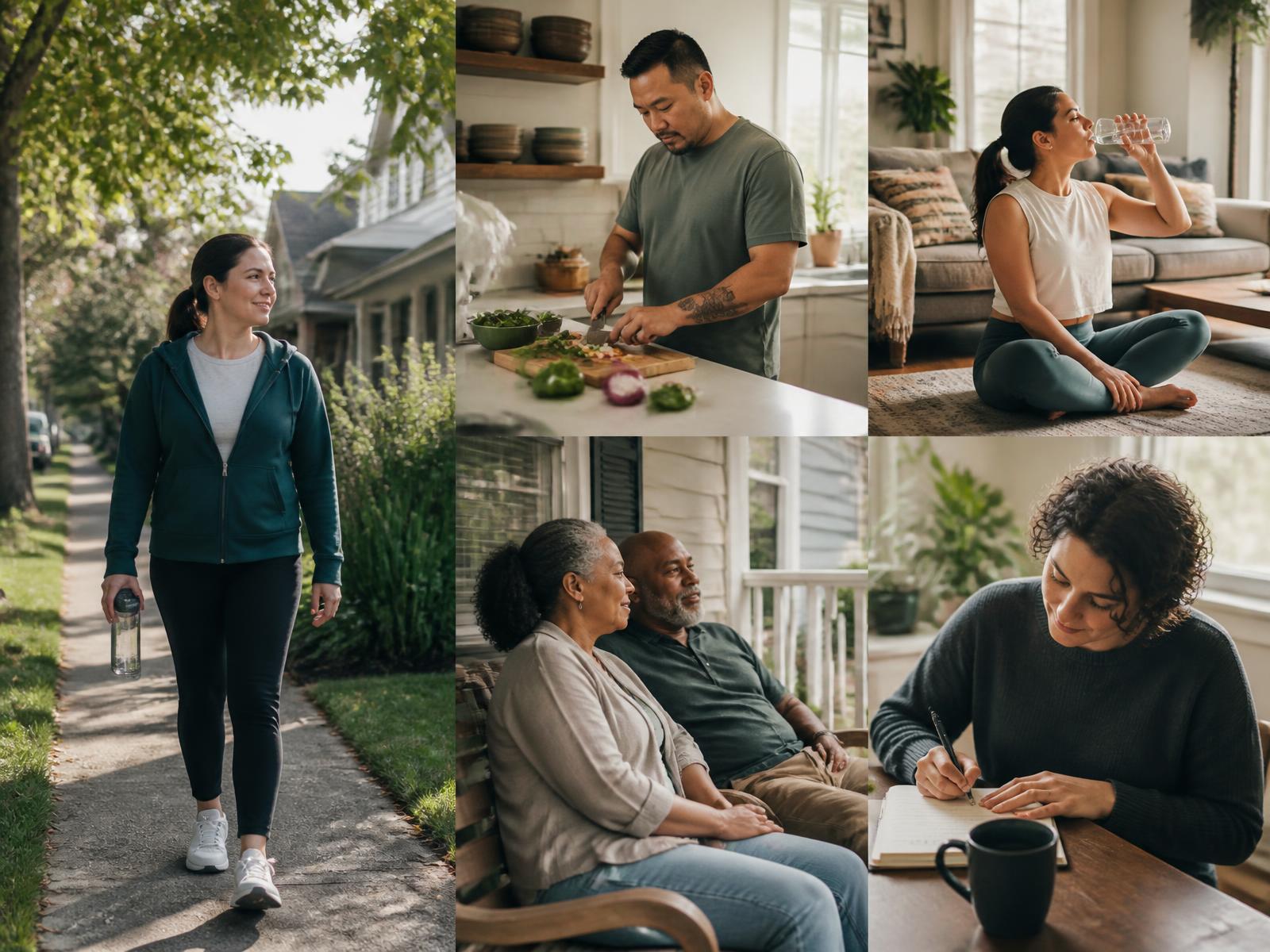
What Is National Wellness Month?
National Wellness Month is observed every August and encourages people to prioritize self-care, healthy routines, stress management and overall well-being.
Established in 2018 by Live Love Spa. It's a health observance promoted by private organizations — not a federal holiday or government program.
Why wellness matters
Wellness Is More Than Eating Healthy.
The areas below pull on each other. A rough week of sleep shows up in your appetite and your patience. A walk with a friend covers movement, stress and connection at once.
That's good news for August: you don't have to work on eight things. Improve one and the others usually get easier.
Physical Wellness
Movement, nutrition, hydration and keeping up with preventive care.
Mental Wellness
Managing stress, protecting focus and building resilience over time.
Emotional Wellness
Naming what you feel, coping in healthy ways, easing up on yourself.
Social Wellness
Relationships, community and conversations that actually feel real.
Sleep Wellness
Consistent sleep and wake times, and rest that leaves you restored.
Environmental Wellness
Spaces at home and work that make calm and focus the default.
Occupational Wellness
Boundaries, sustainable workload and a life outside the job.
Financial Wellness
Simple money habits that take pressure off the rest of your week.
Small habits, big difference
You Don't Need to Change Everything.
Start with one habit. Repeat it. Let consistency do the heavy lifting.
HYDRATE
Sip water steadily through the day instead of catching up at night.
Try this today: Fill a bottle now and finish it before lunch.
NOURISH
Add more fruits, vegetables and nutrient-dense foods to meals you already eat.
Try this today: Add one vegetable to dinner tonight.
MOVE
Walk, stretch, lift or play — activity counts even when it isn't a workout.
Try this today: Walk one lap around the block after your next meal.
SLEEP
Keep your bedtime and wake-up time roughly the same, weekends included.
Try this today: Set a wind-down reminder 45 minutes before bed.
RESET
Breathing, meditation, journaling or anything that lets your nervous system settle.
Try this today: Breathe in for 4, out for 6, ten times.
August 1–31, 2026
Your 31-Day Wellness Challenge
One small action a day. No extreme diets. No impossible workouts. Just practical habits you can actually keep.
Free printable
Get the 31-Day Wellness Challenge PDF
One printable page with all 31 daily actions — stick it on the fridge, share it with your team, or check it off on your phone. No email required.
Miss a day? Pick up where you left off — the streak isn't the point. This challenge avoids calorie restriction, detoxes, fasting protocols and supplement plans on purpose.
Wellness by goal
What Do You Want to Improve?
Lower the daily background noise
Stress builds when there's no release valve in your day. Short, repeatable resets work better than one big escape on the weekend.
- Two minutes of slow breathing before you open your laptop
- A 10-minute walk without headphones or a podcast
- Write the stressor down — on paper it's usually smaller
- Put one recurring commitment on pause this month
The essentials
5 Wellness Habits Worth Keeping
- 01
Drink More Water
Hydration needs vary with body size, activity, heat and health conditions, so there's no single number that fits everyone. A practical test: keep water nearby and drink when you're thirsty, more on hot or active days.
- 02
Eat More Fruits & Vegetables
Variety matters more than perfection. Frozen, canned and fresh all count, and mixing colors across the week is an easy way to cover a wider range of nutrients and fiber.
- 03
Protect Your Sleep
Most adults do better with adequate, regular sleep than with a strict bedtime they can't keep. Consistent timing, a dark room and a wind-down routine are the highest-leverage changes.
- 04
Move Your Body
Walking, yoga, cycling, strength work, stretching, gardening, dancing — activity that fits your week is the kind that lasts. Build up gradually rather than starting at maximum effort.
- 05
Practice Stress Management
Breathing exercises, meditation, journaling, time outdoors, hobbies and social connection are all reasonable tools. Pick two, and keep them small enough to repeat on a bad day.
Make it easier: choose one habit and attach it to something you already do.
Myth vs. fact
Wellness Myths: What Actually Works?
- Myth
Wellness means following a perfect routine.
FactWellness is built from sustainable habits that fit the life you already have — missed days included.
- Myth
You need an expensive wellness routine.
FactMany useful habits are free: walking, sleeping on a schedule, time outdoors, connecting with people, simple relaxation techniques.
- Myth
You need to exercise intensely to be healthy.
FactDifferent forms and intensities of physical activity can contribute to health and stress management.
- Myth
Self-care is only spa treatments and relaxation.
FactSelf-care can include sleep, food, activity, stress management, boundaries and social connection.
Daily check-in
How Are You Doing Today?
Six quick questions, no scoring, no judgment. This is a habit tracker, not a medical or psychological assessment.
0 of 6
wellness habits completed · 0%
Wellness resource hub
Build Your Personal Wellness Toolkit
Free calculators and downloads on Palsbuys to keep the month going after day one.
BMI Calculator
Check where your body mass index falls in seconds.
Access ToolBody Fat Calculator
Estimate body fat percentage using simple tape measurements.
Access ToolCalorie Counter
Work out the daily calories that match your goal.
Access ToolTDEE & Macro Calculator
Get your total daily energy expenditure plus protein, carb and fat targets.
Access ToolExercise Calculator
See how many calories your workouts actually burn.
Access ToolTarget Heart Rate Calculator
Find the heart-rate zones for easy, moderate and hard efforts.
Access ToolKeto Diet Calculator
Set keto macros if low-carb is the direction you're testing.
Access ToolPregnancy Due Date Calculator
Estimate a due date from your last period.
Access ToolAge Calculator
How old am I? Exact years, months and days.
Access ToolHealthy Downloads
Free printable planners, checklists and wellness guides.
Access Tool
Self-care
Self-Care That Actually Fits Real Life
Self-care looks different for everyone, and it doesn't have to be expensive, elaborate or scheduled weeks out. Sort it by the time you actually have.
5-Minute Self-Care
- Deep breathing
- A full-body stretch
- Stepping outside
- Drinking a glass of water
- A quick journal entry
30-Minute Self-Care
- A neighborhood walk
- Yoga or mobility work
- Cooking a real meal
- Reading something not on a screen
- Guided meditation
Weekend Self-Care
- Meal prep for the week
- Time outdoors, somewhere green
- Seeing people in person
- A digital reset
- Planning the week ahead
Credibility
Wellness Tips Backed by Health Research
Everything on this page stays inside general wellness guidance published by established health organizations. No invented studies, no miracle claims, no product promises.
Regular physical activity can help with stress management and mood.
Health agencies including the CDC and Mayo Clinic list activity among everyday stress-management tools.
Adequate, consistent sleep supports both physical and mental health.
The CDC publishes recommended sleep ranges by age and guidance on sleep habits.
Relaxation techniques can help reduce stress symptoms for some people.
Mayo Clinic describes breathing, meditation and progressive relaxation as practical options.
Overall healthy eating patterns matter more than single foods.
The American Heart Association frames nutrition around long-term patterns, not individual items.
Social connection is a meaningful part of well-being.
NIH health communications discuss relationships and connection as components of health.
Self-care is recognized internationally as part of health care, not a replacement for it.
WHO defines self-care alongside — not instead of — professional health services.
Sources & References(show)
- National Day Calendar — National Wellness Month
- National Today — National Wellness Month
- Live Love Spa — National Wellness Month
- Mayo Clinic — Stress management and relaxation techniques
- CDC — Physical Activity Basics
- CDC — About Sleep
- World Health Organization — Self-care interventions for health
- American Heart Association — Healthy Living
- NIH News in Health — Social connection and health
History
The Story Behind National Wellness Month
National Wellness Month was created in 2018 by Live Love Spa, a company working in the spa and wellness industry. It has been observed each August since.
The idea behind it is straightforward: use one month as a prompt to focus on self-care, healthier routines and stress management, then carry whatever worked into the rest of the year. It's a promotional observance rather than an official designation, and there's no governing body, fee or sign-up involved.
For 2026, that means August 1 through August 31. If your calendar makes September a better starting point, the same habits and the same 31-day structure still apply.
Community
Choose Wellness. Share Wellness.
Your wellness journey doesn't have to stay private. Share one habit you're working on and inspire someone else to take a healthy step.
- #NationalWellnessMonth
- #WellnessMonth
- #IChooseWellness
- #Wellfie
FAQ
Frequently Asked Questions
When is National Wellness Month 2026?
National Wellness Month 2026 runs the full month of August — August 1 through August 31, 2026. It is observed every August in the United States, not in September.
What is National Wellness Month?
It's an annual August observance that encourages people to focus on self-care, healthier routines, stress management and overall well-being. There's no registration and no cost — you participate by choosing habits to work on for the month.
Who started National Wellness Month?
National Wellness Month was founded by Live Love Spa in 2018. It is a promotional health observance rather than a federal holiday or government program.
Why is National Wellness Month celebrated?
August lands at the end of summer, right before school and work schedules tighten up. The observance uses that timing to prompt people to reset routines around sleep, food, movement and stress before the busier fall months.
What are simple ways to celebrate National Wellness Month?
Pick one habit and repeat it: a daily walk, a consistent bedtime, water with every meal, a weekly call with someone you care about, or five minutes of breathing before work. Following a day-by-day challenge like the 31-day calendar on this page keeps the decision-making out of it.
What are the five basic wellness habits?
The habits most often highlighted are drinking more water, eating more fruits and vegetables, protecting your sleep, moving your body regularly, and practicing stress management. None of them require special equipment or a membership.
How can I start a wellness routine?
Attach the new habit to something you already do — stretch while coffee brews, walk after lunch, journal right after you brush your teeth. Start smaller than feels impressive, then extend it once it's automatic.
What is a 31-day wellness challenge?
It's one small, specific action per day for a month, covering hydration, nutrition, movement, sleep, stress, mindfulness, connection, digital habits and time outdoors. The point is repetition and variety, not intensity — and missing a day doesn't reset anything.
What is the difference between wellness and self-care?
Wellness is the broader picture — physical, mental, emotional, social and other areas of life over time. Self-care is what you actually do to support it, from sleep and meals to boundaries and rest.
Can wellness habits improve mental health?
Regular physical activity, adequate sleep, relaxation techniques and social connection are all associated with better mental well-being, and health organizations recommend them as part of everyday care. They are not a substitute for treatment — if you're struggling, talk to a licensed professional.
How can I improve my sleep habits?
Keep your sleep and wake times consistent, get daylight early, cut caffeine well before evening, keep the bedroom dark and cool, and give yourself a predictable wind-down. Persistent sleep problems are worth raising with a clinician.
How can I reduce everyday stress?
Build in short, frequent resets: slow breathing, a walk outdoors, movement you enjoy, time away from screens, and honest conversations. Also look at what's adding pressure — one dropped commitment can help more than any technique.
How can I participate in National Wellness Month at home?
Print the 31-day calendar, put it somewhere visible, and check off one action a day. Cook a few meals at home, take short walks, keep a consistent bedtime and invite a family member or roommate to do it alongside you.
Your Wellness Reset Starts Today.
Forget perfection. Pick one healthy habit, start today, and keep building.
This content is for general educational purposes and is not a substitute for professional medical advice.